
As the cannabis industry evolves, new cannabinoids like THCA and HHC are gaining attention. But how do they compare? This guide breaks down the key differences and similarities—from how they’re made to their effects, legality, and therapeutic potential.
What Is THCa?
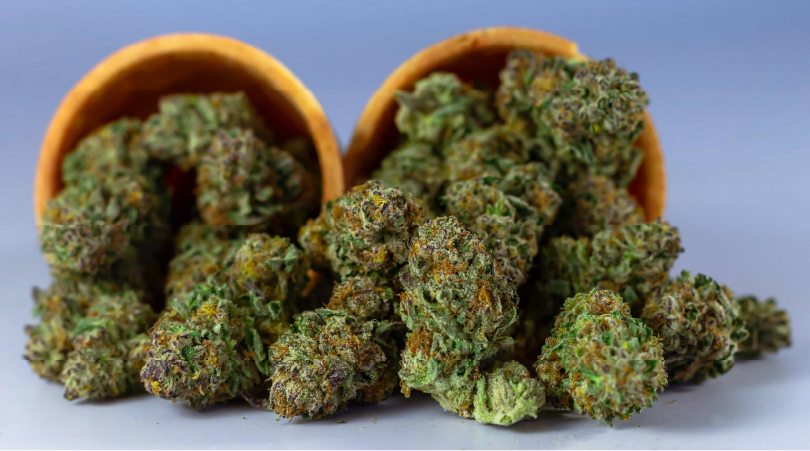
THCA (tetrahydrocannabinolic acid) is the non-psychoactive, raw form of THC found in fresh cannabis. It only becomes psychoactive after heat exposure, a process called decarboxylation. When smoked, vaped, or baked, THCA converts into THC, the compound responsible for the cannabis high.
What Is HHC?
HHC (hexahydrocannabinol) is a hydrogenated derivative of THC. Unlike THCA, it doesn’t occur naturally in cannabis. Instead, HHC is semi-synthetically created by adding hydrogen molecules to THC, making it more stable and resistant to degradation from light and heat.
Legal Status Overview
- THCA is federally legal in the U.S. under the 2018 Farm Bill if derived from hemp and contains less than 0.3% Delta-9 THC by dry weight, as stated by the U.S. Department of Agriculture (USDA).
- HHC could be considered illegal because synthetic compounds are excluded from the USDA’s 2021 final hemp regulations.
According to the U.S. Drug Enforcement Administration, HHC “does not occur naturally in the Cannabis sativa L. plant and can only be obtained synthetically, and therefore does not fall under the definition of hemp.”
Pharmacology & Effects
According to the American Journal of Endocannabinoid Medicine in its article “ECS Explained: Cannabinoid Signaling” about THCa and the study called “Hexahydrocannabinol Pharmacology, Toxicology, and Analysis” about HHC, this could be a comparative:
| Cannabinoid |
Receptor Activity | Potency Level | Potential Effects |
|---|---|---|---|
| THCA | CB1 > CB2 activator | Strong | Euphoria, relaxation… |
| HHC | CB1 & CB2 partial activator | Mild to moderate | Mild euphoria… |
Potential Benefits
As reported in “The Health Effects of Cannabis and Cannabinoids: The Current State of Evidence and Recommendations for Research” and “Therapeutic Benefits of Cannabis: A Patient Survey”, THCa has been shown to help with:
-
- Pain, including chronic and neuropathic pain
- Anxiety or stress
- Insomnia and sleep disturbances, by potentially improving sleep quality among 8 trials
- Focus/concentration
- Appetite
- Depression
- Nausea and vomiting, especially from chemotherapy
On the other hand, HHC with a lower binding affinity to both receptors, besides being smoother, may not have such an impact when it comes to therapeutic effects.
Onset and Duration
As explained in “Pharmacokinetics and pharmacodynamics of cannabinoids”, THC (and THCA) effects usually depend on dose and specific method of consumption:
- Inhaled THC causes effects within minutes, reaching a maximum after 15-30 minutes, and decreasing within 2-3 hours.
- Oral ingestion, effects set in with a delay of 30-90 minutes, might reach their maximum after 2-3 hours and last for about 4-12 hours.
HHC could have a similar onset with effects. Because HHC products aren’t regulated and are less researched, it’s complex to tell just how much HHC is in a product you buy, if it will get you high, or how long it could last.
Safety & Side Effects
With THCa, moderation is key. High doses can cause anxiety—especially in sensitive individuals. So it’s better to always start slow and see how your body reacts.
In contrast, HHC users reported adverse effects as shown by “A Survey Study of Individuals Using Hexahydrocannabinol Cannabis Products”, such as dry mouth and dizziness being the most common, affecting about 17% of participants.
How THCa And HHC Are Made?
- THCa is derived directly from raw cannabis plants. It’s extracted and preserved through careful harvesting and processing methods that avoid heat, ensuring it doesn’t convert into THC prematurely.
- HHC, on the other hand, is created by chemically converting THC or CBD using hydrogenation.
Who Might Use Each?
- THC (or THCa) is best suited for those seeking potential therapeutic relief from pain, anxiety, nausea, insomnia, or appetite loss, or for users looking for a stronger recreational effect.
- HHC may be preferred by users who are sensitive to THC or want a milder, more manageable experience.
Product Forms
- THCa: Commonly found in flower, pre-rolls and vapes.
- HHC: Mostly sold as edibles, tinctures, capsules, and vape products.
If you decide to give THCa a try, check out our store at Certified Headies.
References
Webb CW, Webb SM. Therapeutic benefits of cannabis: a patient survey. Hawaii J Med Public Health. 2014 Apr;73(4):109-11. PMID: 24765558; PMCID: PMC3998228.
National Academies of Sciences, Engineering, and Medicine; Health and Medicine Division; Board on Population Health and Public Health Practice; Committee on the Health Effects of Marijuana: An Evidence Review and Research Agenda. The Health Effects of Cannabis and Cannabinoids: The Current State of Evidence and Recommendations for Research. Washington (DC): National Academies Press (US); 2017 Jan 12. 4, Therapeutic Effects of Cannabis and Cannabinoids. Available from: https://www.ncbi.nlm.nih.gov/books/NBK425767/
Graziano S, Varì MR, Pichini S, Busardo FP, Cassano T, Di Trana A. Hexahydrocannabinol Pharmacology, Toxicology, and Analysis: The First Evidence for a Recent New Psychoactive Substance. Curr Neuropharmacol. 2023;21(12):2424-2430. doi: 10.2174/1570159X21666230623104624. PMID: 37357519; PMCID: PMC10616920.
Ferretti ML, Gournay LR, Bingaman MG, Leen-Feldner EW. A Survey Study of Individuals Using Hexahydrocannabinol Cannabis Products: Use Patterns and Perceived Effects. Cannabis Cannabinoid Res. 2024 Oct;9(5):e1385-e1394. doi: 10.1089/can.2023.0143. Epub 2023 Nov 7. PMID: 37934167.
USDA. Agricultural Marketing Service. U.S. Department of Agriculture. Enforcement Discretion – Interim Final Rule. https://www.ams.usda.gov/rules-regulations/hemp/enforcement
Hemp Provisions in the House Farm Bill and FY2025 Agriculture Appropriations Bill. (2025, June 10). https://www.congress.gov/crs-product/IN12381
Loren M. DeVito, PhD. ECS Explained: Cannabinoid Signaling. https://www.endocannabinoidmedicine.com/cannabinoid-signaling/#:~:text=Phytocannabinoid%20Signaling,11
Grotenhermen F. Pharmacokinetics and pharmacodynamics of cannabinoids. Clin Pharmacokinet. 2003;42(4):327-60. doi: 10.2165/00003088-200342040-00003. PMID: 12648025.