
Flavonoids are natural compounds found in many fruits, vegetables, flowers, and herbs—but did you know they’re also part of the cannabis plant? While cannabinoids like THC and CBD often get the spotlight, flavonoids are another group of chemical compounds that contribute to the plant’s therapeutic properties and its synergy, known as the “entourage effect.”
In this article, we’ll break down what flavonoids are, how they function in cannabis, how they differ from terpenes and cannabinoids, and what current research says about their potential health benefits.
What Are Flavonoids in Cannabis?
Flavonoids are a class of plant secondary metabolites responsible for color, UV filtration, symbiotic nitrogen fixation, and plant defense. In cannabis, they contribute to the plant’s pigmentation and work alongside cannabinoids and terpenes to enhance therapeutic effects.
According to the article “Cannabinoids, Phenolics, Terpenes and Alkaloids of Cannabis”, cannabis contains 34 identified flavonoids, including:
- Apigenin
- Luteolin
- Quercetin
- Kaempferol
- Cannflavins A, B, and C – which are unique to cannabis
Cannflavins are particularly notable for their potential anti-inflammatory effects.
What Do Flavonoids Do in Cannabis Plants?
Flavonoids in cannabis have several purposes:
- Protection against UV radiation
- Regulation of plant pigmentation (color of leaves and buds)
- Antioxidant and antimicrobial activity
- Interaction with other compounds to modulate effects
In addition, flavonoid content in cannabis can vary depending on the age of the plant—younger cannabis plants tend to have higher concentrations, according to “Cannabinoids and Terpenes: How Production of Photo-Protectants Can Be Manipulated.”
Key Cannabis Flavonoids and Their Health Benefits
Cannabis contains over 20 flavonoids, including several unique to the plant. These compounds are not psychoactive, but research suggests they may play a supportive role in cannabis’ overall therapeutic profile.
- Cannflavin A, B, C – Found only in cannabis. “Cannabinoids, Phenolics, Terpenes and Alkaloids of Cannabis” and “Anti-Cancer Potential of Cannabinoids, Terpenes, and Flavonoids Present in Cannabis” suggest these may have strong anti-inflammatory properties, possibly stronger than aspirin in vitro.
- Quercetin – A well-known flavonoid also found in apples and onions, exhibits antioxidant and anticancer properties in preclinical studies.
- Kaempferol – Found in green tea and cannabis. Linked to cardiovascular support and anticancer effects in multiple in vitro and in vivo models.
- Apigenin – Present in chamomile and cannabis. Research cited in “Medicinal Properties of Cannabinoids, Terpenes, and Flavonoids in Cannabis” links apigenin to neuroprotective and calming effects.
Flavonoids vs Terpenes vs Cannabinoids
| Compound Type | Function | Psychoactive? |
| Cannabinoids | Bind to endocannabinoid receptors and regulate pain, mood, appetite | Some (e.g., THC) |
| Terpenes | Create aroma, flavor, and enhance therapeutic effects | No |
| Flavonoids | Influence pigmentation, aroma, and may offer anti-inflammatory, antioxidant, or neuroprotective effects | No |
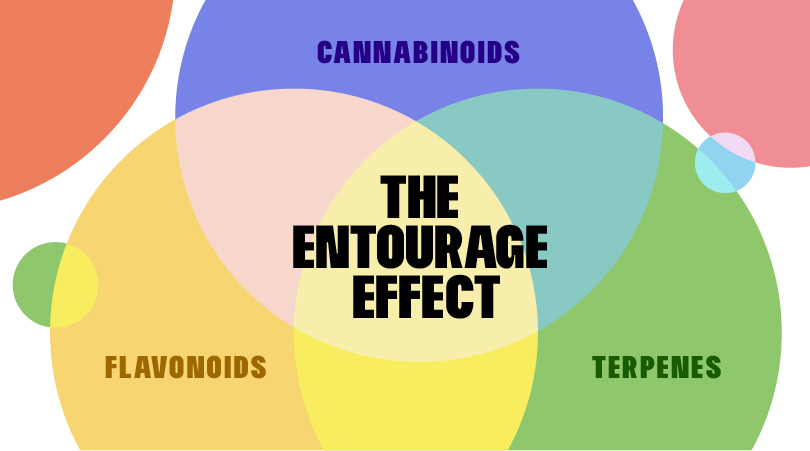
Each compound type brings unique properties to cannabis. Flavonoids, terpenes, and cannabinoids all work together, sometimes amplifying each other’s effects through a concept known as the entourage effect.
Flavonoids and the Entourage Effect
Yes—flavonoids, like terpenes, may enhance or moderate the effects of cannabinoids.
While flavonoids don’t bind to cannabinoid receptors like THC or CBD, studies like “A Closer Look at Cannabimimetic Terpenes, Polyphenols, and Flavonoids” suggest that they can influence inflammatory pathways and neurotransmitter systems. This means they may help balance or reinforce the effects of cannabinoids, especially in full-spectrum cannabis products.
FAQs
Are flavonoids unique to cannabis?
No. They are found in many plants, but cannabis has a few unique ones—like cannflavins—that aren’t found elsewhere.
Do flavonoids get you high?
No. Flavonoids are not psychoactive, but they may influence how you experience the effects of THC and CBD.
Can I feel the effects of flavonoids directly?
Not in the same way as THC or CBD. But their anti-inflammatory or antioxidant properties may offer long-term wellness benefits.
If you’re thinking about trying THCa, now you know many reasons to do it. Check out our shop for high-quality THCa flower, pre-rolls, or vapes.
References
Baron, E.P. (2018), Medicinal Properties of Cannabinoids, Terpenes, and Flavonoids in Cannabis, and Benefits in Migraine, Headache, and Pain. Headache, 58: 1139-1186. https://doi.org/10.1111/head.13345
Radwan, M. M., Chandra, S., Gul, S., & ElSohly, M. A. (2021). Cannabinoids, Phenolics, Terpenes and Alkaloids of Cannabis. Molecules, 26(9), 2774. https://doi.org/10.3390/molecules26092774
Russo, E.B. (2011), Taming THC: potential cannabis synergy and phytocannabinoid-terpenoid entourage effects. British Journal of Pharmacology, 163: 1344-1364. https://doi.org/10.1111/j.1476-5381.2011.01238.x
Brousseau, V. D., Wu, B. S., MacPherson, S., Morello, V., & Lefsrud, M. (2021). Cannabinoids and terpenes: how production of photo-protectants can be manipulated to enhance Cannabis sativa L. phytochemistry. Frontiers in Plant Science, 12, 620021. https://www.frontiersin.org/articles/10.3389/fpls.2021.620021/full
Cavalli J, Dutra RC. (2021). A closer look at cannabimimetic terpenes, polyphenols, and flavonoids: a promising road forward. Neural Regen Res. 16(7):1433-1435. doi: 10.4103/1673-5374.301011. https://www.ncbi.nlm.nih.gov/pmc/articles/PMC8284286/
Tomko, A. M., Whynot, E. G., Ellis, L. D., & Dupré, D. J. (2020). Anti-Cancer Potential of Cannabinoids, Terpenes, and Flavonoids Present in Cannabis. Cancers, 12(7), 1985. https://doi.org/10.3390/cancers12071985