
If you enjoy THCa flower and want to unlock its full effects, you’ll need to decarb it first. Decarboxylation is what transforms THCa—the raw, non-psychoactive form—into THC, the compound responsible for cannabis’ signature high.
In this guide, we’ll explain how decarboxylation works, why it’s essential for recreational THCa users, how to do it properly, and what happens if you don’t.
What Is Decarboxylation?
THCa (tetrahydrocannabinolic acid) is the precursor of THC found in raw cannabis. On its own, THCa won’t get you high. But once heated—through smoking, vaping, baking, or infusing—it sheds a carboxyl group (COOH) and becomes THC.
According to “Cannabinoid Decarboxylation: A Comparative Kinetic Study”, decarboxylation happens most efficiently under controlled heat and the speed of this process depends on how much of THCa is present.
Decarboxylation Temperatures: Finding the Sweet Spot
“A Unique Approach for In-Situ Monitoring of the THCA Decarboxylation Reaction in Solid State” confirms that peak THC formation happens at 293°F (or 145°C) in under 10 minutes—but drops off quickly with extended exposure.
Also, as explained in “Optimization of the Decarboxylation of Cannabis for Commercial Applications”, THC peaks at around 279°F (or 137°C) after 57 minutes under optimal conditions.
Additionally, according to “Influence of Temperature and Heating Time on the Decarboxylation of Δ9-THCA and CBDA in the Cannabis Inflorescences”, nearly all THC can convert into CBN after just 10 minutes at 302°F (or 150°C).
These statements might seem contradictory, but they’re not. Let’s clarify:
| Study | Focus | Implication |
|---|---|---|
| 230°F (137°C) > 57 min | Efficiency over time | Optimal for THC yield while minimizing degradation |
| 302°F (150°C) > 10 min | Degradation | Shows THC breaks down to CBN quickly at high temperature |
| 293°F (145°C) < 10 min | Speed vs loss | Fast peak THC, but narrow margin before loss |
“Decarboxylation of Tetrahydrocannabinolic acid (THCA) to active THC” found that THC begins to evaporate around 314°F (157°C) and prolonged heat exposure reduces potency.
So, getting the timing and temperature right is crucial. In summary:
- Lower temps = safer, longer process with stable yield.
- Higher temps = faster decarb, but greater risk of degrading THC.
How to Decarb THCa Flower: Methods and Tips
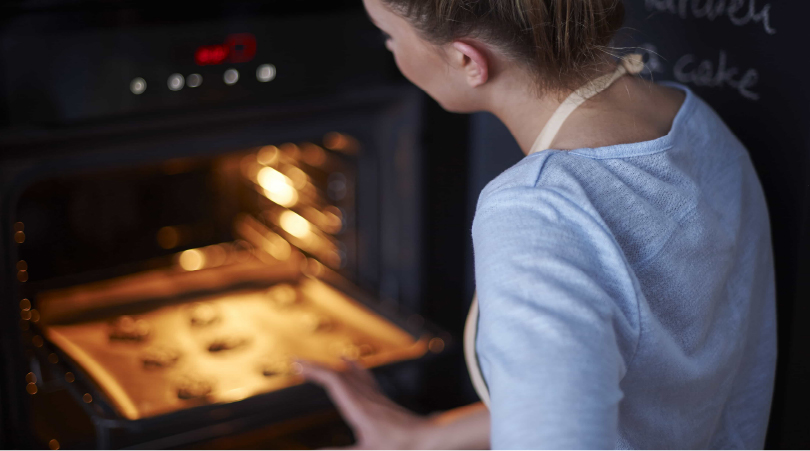
Whether you’re prepping THCa flower for homemade edibles, vape-ready material, or infusing it into butter, these methods can help you get the most out of your cannabis:
1. Oven Method
-
- Prep: Preheat oven to ~240°F (115°C)
- Grind your flower and spread it on a parchment-lined tray
- Bake for 30–45 minutes
Pros: Easy, accessible
Cons: Harder to control temperature variations
2. Mason Jar Method
-
- Place flower in a sealed mason jar
- Heat at 110–120°C (230–248°F) in the oven for 40–60 minutes
Pros: Smells less, preserves terpenes
Cons: Requires careful monitoring
3. Sous Vide (Precision Water Bath)
-
- Vacuum-seal cannabis or place in a zip bag
- Submerge in water heated to 203–212°F (95–100°C) for 90 minutes
Pros: Precise, terpene-friendly
Cons: Needs equipment
4. Decarboxylation Machines (e.g., Ardent Nova, Magical Butter)
-
- Automated; set-and-forget
Pros: Consistent results
Cons: More expensive
5. Smoking
-
- THCa flower can be smoked through a joint or pre-roll, applying direct heat through a flame..
Pros: Instant activation, no prep needed
Cons: No temp control
6. Vaping
-
- Vapes involve heating THCa flower to a precise temperature range.
Pros: Better preservation of flavor and terpenes
Cons: Initial cost may be higher
7. Natural Decarboxylation
-
- Over time, exposure to air, light, and mild heat can cause THCa to convert slowly into THC—even without deliberate heating.
Pros: No action needed
Cons: May result in cannabinoid degradation
Key Takeaways for THCa Users
As reported in “Decarboxylation of Δ9-tetrahydrocannabinol: Kinetics and Molecular Modeling”, optimizing your temperature curve minimizes unwanted byproducts and boosts potency.
- THCa must be decarboxylated to feel its effects
- Lower temps preserve more flavor and THC
- Too much heat = weaker results
FAQs
Do I need to decarb before smoking or vaping?
No. Smoking and vaping automatically heat THCa enough to convert it to THC. In other words, they’re decarboxylation methods themselves.
Why do I need to decarb THCa before making edibles or tinctures?
Because raw THCa won’t get you high unless it’s heated. Baking, infusing, or cooking won’t work unless you decarb first.
What’s the safest temperature to decarb THCa without losing potency?
239–248 °F (115–120 °C) for 30 – 45 minutes is a good range. Keep it low and slow.
Can I decarb THCa in a toaster oven or air fryer?
Yes, if you can control the temperature. Use an oven thermometer to be sure.
Is it possible to overdo it when decarboxylating THCa?
Yes. Overheating or cooking too long leads to THC breakdown into CBN, which produces more sedative effects.
Final Thoughts
If you’re a recreational THCa flower consumer, decarboxylation is the secret to making it truly work. Whether you’re making gummies, tinctures, or just want to elevate your flower’s potency, learning how to decarb properly ensures better effects and less waste.
Start low, watch your temp. Get your THCa flower now, try your decarb method of preference and enjoy the full potential of cannabis.
References
Perrotin-Brunel, H., Buijs, W., van Spronsen, J., van Roosmalen, M.J.E., Peters, C.J., Verpoorte, R., & Witkamp, G.-J. (2011). Decarboxylation of Δ9-tetrahydrocannabinol: Kinetics and molecular modeling. Journal of Molecular Structure, 987(1–3), 67–73. https://doi.org/10.1016/j.molstruc.2010.11.061
Reason, D.A., Grainger, M.N.C., & Lane, J.R. (2022). Optimization of the Decarboxylation of Cannabis for Commercial Applications. Industrial & Engineering Chemistry Research, 61(23), 7823–7832. https://doi.org/10.1021/acs.iecr.2c00826
Moreno, T., Dyer, P., & Tallon, S. (2020). Cannabinoid Decarboxylation: A Comparative Kinetic Study. Industrial & Engineering Chemistry Research, 59(46), 20307–20315. https://doi.org/10.1021/acs.iecr.0c03791
Iffland, K., Carus, M., & Grotenhermen, F. (2016). Decarboxylation of Tetrahydrocannabinolic acid (THCA) to active THC. European Industrial Hemp Association. https://static.t-cdn.net/5f7bf9bee3d3336673947f95/posts/5f7e18e09809b55c37539fd5/60659_16-10-25-Decarboxylation-of-THCA-to-active-THC.pdf
Zaharia, L.S., Trofin, I., Vaireanu, D.I., & Dabija, G. (2020). Influence of temperature and heating time on the decarboxylation of Δ9-THCA and CBDA in the cannabis inflorescences. UPB Sci Bull Ser B, 82(3), 73–84. https://www.scientificbulletin.upb.ro/rev_docs_arhiva/rez0e1_161311.pdf
Gigopulu, O., Geskovski, N., Stefkov, G., Gjorgievska, V.S., Spirevska, I.S., Huck, C.W., & Makreski, P. (2022). A unique approach for in-situ monitoring of the THCA decarboxylation reaction in solid state. Spectrochimica Acta Part A: Molecular and Biomolecular Spectroscopy, 267(Part 2), 120471. https://doi.org/10.1016/j.saa.2021.120471